Behind the Scenes: How Software Training Institutes in Chennai Prepare You for Real-World Projects
For anyone starting a career in IT, learning theory alone is no longer enough. The industry expects job seekers to understand tools, frameworks, workflows, teamwork, and problem-solving — the same way they would inside a real company. That’s why practical software training institutes in Chennai has become the first choice for students, professionals, and career switchers who want to stand out.
Today, many aspirants ask an important question:
“What really happens behind the scenes inside software training institutes? How do they prepare students for real-world projects?”
This in-depth guide reveals exactly that. You’ll learn how training centers shape job-ready professionals using project-based learning, practical sessions, real environments, and industry-driven guidance.
Let’s go behind the curtains.
Why Practical, Project-Based Learning Matters More Than Ever
Table of Contents
Modern companies don’t hire based on theoretical understanding alone. They hire people who can apply skills, understand project workflows, and contribute from day one.
Here’s why project-based learning has become a game-changer:
You learn by doing, not just listening
You understand real issues like bugs, deadlines, version conflicts, testing gaps, and deployment challenges
You can showcase real projects during interviews
You gain confidence to work in professional environments
This is where software training institutes in Chennai play a crucial role — they recreate real IT environments inside the institute to prepare you for real corporate life.
Inside Modern Software Training Institutes in Chennai: What Actually Happens
1. Hands-On Labs That Replicate Real IT Environments
Leading software training institutes in Chennai focus heavily on setting up lab environments that allow students to practice just like they would in real companies. These labs include:
Real tools used by industries
Cloud-based virtual machines
DevOps pipelines for testing and deployment
Real databases
Real bug-tracking systems
Git version control just like corporate teams
This practical environment ensures that students don’t just learn how a tool works — they learn how teams collaborate, commit code, raise issues, fix bugs, and manage versions exactly the way companies do.
2. Project-Based Learning from Day One
A strong IT career is built on projects. Institutes design their courses with:
Mini projects after each module
Weekly coding or testing assignments
End-to-end capstone projects
Real-time scenarios based on industry use cases
For example:
Testing students work on live bug logs, write test cases, and execute test cycles
Full stack students build dashboards, APIs, portals, and databases
Data science students handle real datasets, build models, and visualize insights
This approach allows students to apply concepts immediately, not months later.
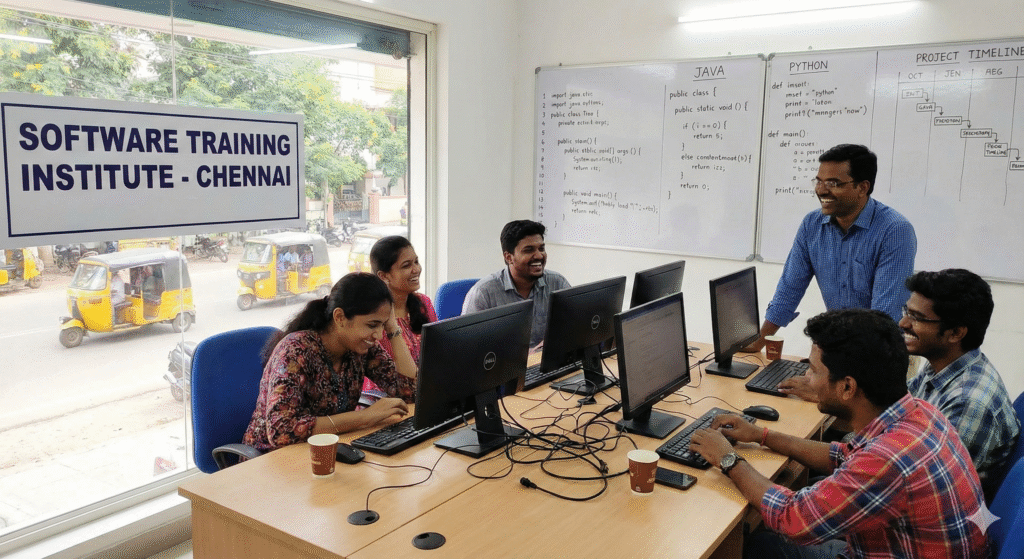
3. Real-Time Project Simulations with Teams
Today’s IT ecosystem runs on teamwork. Institutes therefore create simulated project teams inside the classroom:
A trainer acts as the Product Owner or Team Lead
Students are assigned roles such as developer, tester, analyst, or designer
Projects follow Agile or Scrum methodology
Daily standups and weekly sprints are conducted
Students work collaboratively on shared repositories
This simulation teaches students:
How to communicate professionally
How to collaborate on files and repositories
How to follow deadlines
How to solve problems as a team
These are the exact skills interviewers look for.
4. Exposure to Real Tools and Technologies Used in Companies
A major advantage of practical software training institutes in Chennai is hands-on exposure to industry tools such as:
Git & GitHub
JIRA
Postman
Selenium / Cypress / Playwright
MySQL / MongoDB / PostgreSQL
AWS / Azure basics
Jenkins & CI/CD pipelines
Python, Java, JavaScript tech stacks
Power BI & Tableau for analytics
By the time students complete their training, they are no longer beginners. They already know how to operate the tools that companies expect them to use.
5. Working With Real-Life Case Studies
Institutes use practical case studies such as:
Ecommerce workflows
Banking applications
Healthcare systems
Ticket booking platforms
Logistics dashboards
These real-world use cases help students:
Understand application architecture
Learn how features interact
Analyze bugs and issues in a real system
Work on requirements like an actual employee
This gives a clear advantage during interviews because students can talk confidently about application workflows.
6. Soft Skills & Interview Readiness Training
Project knowledge alone won’t get you hired. Companies expect students to be:
Confident
Clear in communication
Good in problem-solving
Able to explain their work
That’s why institutes provide:
Resume preparation sessions
Mock interviews
HR training
Communication improvement sessions
Portfolio preparation
Git project showcase guidance
These sessions ensure students are ready to face real interview challenges.
7. Placement Support & Real-Company Connections
One of the biggest strengths of Chennai’s training ecosystem is the network. Institutes maintain connections with:
Startup founders
HR professionals
IT managers
Hiring partners
Portfolio-based clients
They regularly send student profiles, arrange interviews, and guide learners on how to handle technical rounds. The combination of practical training + project experience + placement support makes students fully job-ready.
8. Continuous Mentorship and Industry Guidance
Experienced trainers guide students on:
Career choices
Job roles
Skill development paths
Portfolio improvement
Industry expectations
How to grow after getting placed
This personalized mentorship is something students can’t get from online videos or self-learning.
9. Real-Time Assessments & Performance Tracking
To ensure students learn properly, institutes conduct:
Weekly project reviews
Test case writing assessments
Code reviews
Debugging challenges
Real-world scenario tasks
These assessments mirror real working conditions and help students improve continuously.
10. Why Project-Based Learning Works Better Than Traditional Classroom Teaching
Traditional learning focuses on memorizing concepts, notes, and theory-heavy content. But IT companies don’t hire based on memory — they hire based on the ability to execute. That’s why software training institutes in Chennai emphasize project-based learning.
Project-based learning helps students learn faster, remember concepts longer, build confidence, solve problems independently, showcase real results to employers, and create strong resumes and portfolios. This practical, hands-on approach has become the backbone of modern IT upskilling.
Conclusion: Real IT Careers Are Built on Real Projects
Behind the scenes, training institutes work hard to replicate the real corporate environment — the tools, the challenges, the teamwork, the deadlines, and the project workflows.
When students go through this practical journey, they transform from beginners into industry-ready professionals who can work confidently from day one.
Ready to Start Your Practical, Project-Based IT Career?
If you want to learn with real-time projects, hands-on tools, and strong placement support, reach out to Trendnologies and start your career journey today.
FAQs
Because companies expect job-ready skills, and real projects help students apply theory, solve problems, and understand workflows
Yes. Most institutes now include hands-on labs, simulations, assignments, and capstone projects.
Absolutely. Project-based learning helps you build a strong GitHub portfolio to showcase during interviews.
Tools include Git, JIRA, database systems, Postman, automation frameworks, cloud environments, and more.
Yes. Institutes provide case studies like ecommerce, banking, and healthcare applications.
Definitely. Practical experience builds confidence and makes career transitions easier.
Many follow Agile/Scrum methods with daily standups, team roles, and sprint cycles.
It depends on the course. Full stack and data science require coding; testing courses require scripting basics.
Yes. Interviewers often ask about your project experience, tools used, challenges faced, and solutions implemented.
Both. Institutes mix solo tasks with team-based simulations to prepare you for real workplace situations.