
How AI Is Creating New Jobs(Not Taking Them Away)
The moment artificial intelligence enters a conversation, fear usually follows. People imagine machines replacing humans, jobs disappearing overnight, and careers becoming irrelevant. But step back and observe reality more closely, and you’ll see a very different picture forming. What’s actually happening across industries is AI creating new jobs, reshaping careers, and opening doors that didn’t exist before.
Instead of eliminating work, AI is changing how work is done. This transformation is not about humans versus machines—it’s about humans evolving alongside technology.
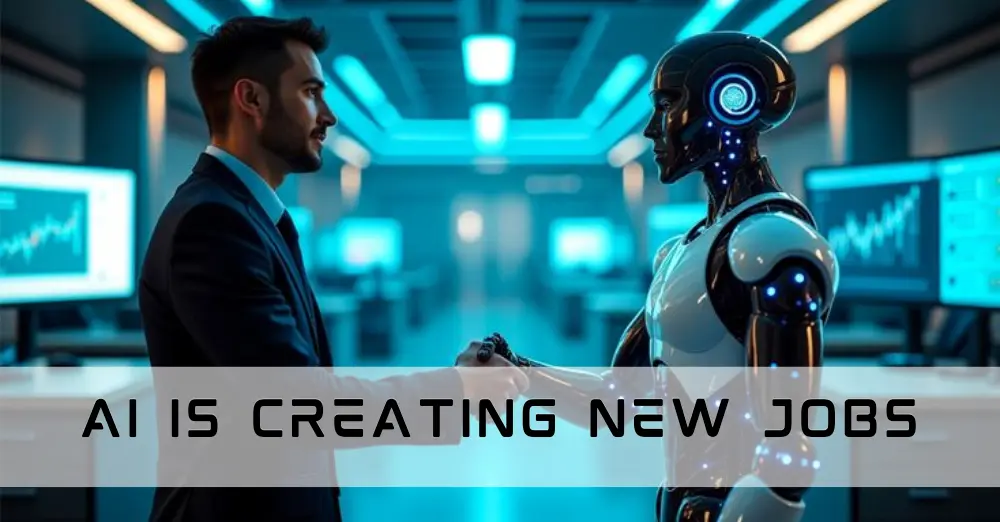
Table of Contents
Every Major Innovation Has Sparked Job Creation
History has already answered this question for us. When electricity replaced manual labor, jobs didn’t vanish—they multiplied. When computers entered offices, clerks didn’t disappear; analysts, developers, and system administrators emerged. Today, the same cycle is repeating, with AI creating new jobs that align with modern business needs.
Fear usually comes from unfamiliarity. Growth comes from understanding.
AI Is Shifting Roles, Not Removing People
AI excels at automation, but automation doesn’t mean elimination. It means efficiency. When repetitive tasks are automated, humans move upward—to decision-making, creativity, strategy, and oversight. This shift is one of the strongest reasons AI creating new jobs is becoming a global reality.
For example, instead of manually processing data, professionals now manage intelligent systems that interpret data. This shift requires more skills, not fewer.
Why AI Needs Human Intelligence to Function
AI cannot operate independently. It relies on humans to train models, define logic, interpret outputs, and correct errors. Without human involvement, AI systems fail. That’s why AI creating new jobs continues across technical and non-technical roles.
Humans bring judgment, ethics, empathy, and real-world understanding—qualities AI cannot replicate. This partnership fuels employment growth.
Entirely New Job Titles Are Emerging
Five years ago, many AI-related roles didn’t exist. Today, they’re among the fastest-growing professions. This explosion proves that AI creating new jobs isn’t theory—it’s happening right now.
Roles such as AI operations specialists, prompt designers, AI quality analysts, and automation strategists are becoming essential. These roles exist because AI needs supervision and refinement.
The Rise of Skill-Based Careers
Degrees once defined careers. Now, skills define value. Companies are less concerned about academic labels and more interested in problem-solving ability and adaptability. This shift supports AI creating new jobs, especially for learners who continuously upskill.
This is why choosing the Best software training institute in Chennai matters—it helps individuals develop relevant, future-ready skills instead of outdated knowledge.
AI Is Expanding Opportunities for Non-IT Professionals
AI isn’t just for engineers. Designers, marketers, analysts, testers, HR professionals, and content creators are all benefiting from AI creating new jobs within their domains.
Non-technical professionals who understand how to work with AI tools gain a competitive advantage. AI acts as an assistant, not a replacement.
Entry-Level Careers Are Evolving, Not Disappearing
One major concern is freshers losing opportunities. In reality, AI creating new jobs is reshaping entry-level roles into smarter, more impactful positions.
Instead of repetitive tasks, beginners now validate AI outputs, manage workflows, and learn faster with intelligent tools. Entry-level jobs now focus on learning agility rather than manual labor.
AI Is Fueling Job Growth Across Industries
Healthcare, finance, education, manufacturing, logistics, and retail are all hiring because of AI. This cross-industry adoption further proves AI creating new jobs is not limited to IT alone.
Each industry needs professionals who understand both domain knowledge and AI-powered systems. This intersection is where future careers thrive.
Why Continuous Learning Is the Real Job Security
The professionals who benefit most from AI creating new jobs are those who embrace change. Learning once is no longer enough. Continuous upskilling keeps careers relevant.
Institutes like the Best software training institute in Chennai focus on real-world exposure, modern tools, and industry-aligned learning—helping learners stay employable as technology evolves.
AI Is Creating Jobs That Are More Human-Centered
Ironically, as machines become smarter, human skills become more valuable. Communication, creativity, ethics, leadership, and emotional intelligence are now in high demand. This human emphasis is another reason AI creating new jobs feels different from past technological shifts.
AI handles speed. Humans handle meaning.
The Global Demand for AI-Skilled Professionals
Companies worldwide are racing to adopt AI responsibly. This demand fuels AI creating new jobs at an international scale, opening remote and global opportunities.
Professionals who understand AI collaboration—not just AI coding—are becoming essential assets.
AI Is a Career Accelerator, Not a Career Ender
Those who resist AI may feel threatened. Those who learn it gain leverage. AI creating new jobs rewards curiosity, adaptability, and proactive learning.
AI doesn’t replace ambition—it amplifies it.
Final Perspective: The Future Is Collaborative
The narrative of job loss is outdated. The truth is far more optimistic. AI creating new jobs reflects a future where humans and technology grow together.
The question isn’t whether AI will change careers.
The question is whether you’ll change with it.
FAQs: How AI Is Creating New Jobs
AI is doing both. It is transforming existing roles and creating entirely new job categories across industries.
Because AI systems require human supervision, decision-making, and contextual understanding to function effectively.
Yes, freshers can enter AI-influenced roles by learning relevant tools and developing adaptability skills.
Absolutely. Many AI-related roles require domain expertise, communication, and analytical thinking rather than coding.
Problem-solving, critical thinking, communication, and continuous learning are key skills.
No. AI-driven job growth spans healthcare, finance, education, manufacturing, and many other industries.
By learning modern tools, gaining hands-on exposure, and choosing industry-relevant training paths.
AI is reshaping entry-level roles, not removing them, by shifting focus toward smarter responsibilities.
Because technology evolves quickly, and continuous learning ensures long-term career stability.
It provides practical training, updated skill development, and industry-aligned learning to prepare professionals for evolving roles.