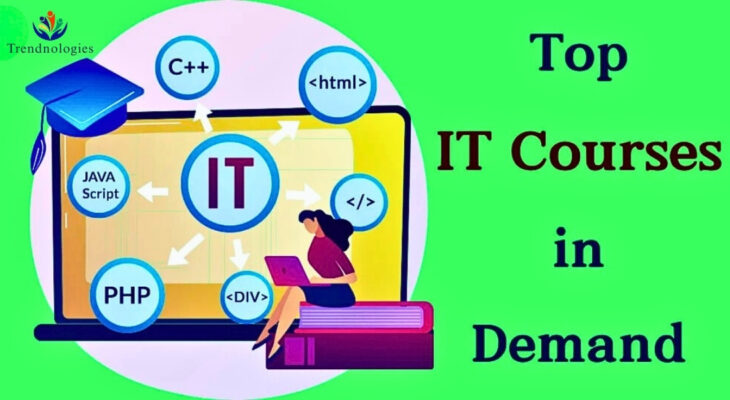


Top IT Courses in 2025 That Guarantee Strong Career Growth

Top IT Courses in 2025 That Guarantee Strong Career Growth In today’s fast-changing digital era, staying relevant in the IT industry requires continuous learning and skill upgrades. The year 2025 is shaping up to be even more competitive, with companies prioritizing professionals who are skilled in emerging technologies. If you’re looking to secure your future in IT, choosing the right course can make all the difference. Here’s a list of the Top IT courses in 2025 that guarantee strong career growth and global opportunities. Know More Table of Contents Data Analytics and Business Intelligence Data has become the new oil, and organisations are heavily investing in data analytics to drive decisions. Learn data Analytics visualisation tools, Python, SQL, Power BI, and Tableau. Gain skills in analysing raw data and turning it into business insights. Career roles: Data Analyst, Business Analyst, BI Developer. Artificial Intelligence (AI) & Machine Learning (ML) AI and ML continue to dominate the IT sector in 2025. From chatbots to recommendation systems, AI is everywhere. Learn TensorFlow, Scikit-Learn, PyTorch, NLP, and Deep Learning. Be prepared for futuristic careers like AI Engineer, ML Engineer, Data Scientist. Cloud Computing with AWS & Azure Cloud adoption is skyrocketing, and companies need skilled professionals to handle migration, storage, and security. Master AWS, Microsoft Azure, and Google Cloud Platform. Learn DevOps practices with Docker, Kubernetes, and CI/CD pipelines. Career roles: Cloud Engineer, AWS Data Engineer, Cloud Architect. Cybersecurity With rising cyberattacks, organizations are investing in robust security measures. Cybersecurity professionals are in high demand in 2025. Learn ethical hacking, penetration testing, network security, and risk management. Career roles: Cybersecurity Analyst, Ethical Hacker, Security Consultant. Software Development with Python & Java Python and Java remain among the most in-demand programming languages. Python powers data science, AI, and automation. Java continues to dominate enterprise applications and Android development. Career roles: Full Stack Developer, Software Engineer, Backend Developer. Data Engineering The future belongs to those who can manage and process massive amounts of data. Learn ETL tools, big data frameworks (Hadoop, Spark), and AWS Data Engineering tools like Glue, Redshift, and Kinesis. Career roles: Data Engineer, Big Data Engineer, Database Administrator. Blockchain & Web3 Development The growth of cryptocurrencies, smart contracts, and decentralised apps (dApps) has boosted demand for blockchain experts. Learn Solidity, Ethereum, Hyperledger, and Web3.js. Career roles: Blockchain Developer, Web3 Engineer, Crypto Analyst. UI/UX & Web Development User experience remains at the heart of every digital product. Learn HTML, CSS, JavaScript, React, Angular, Figma, and Adobe XD. Career roles: Front-End Developer, UI/UX Designer, Web Developer. Software Testing & Quality Assurance Automation testing remains a must-have skill. Learn Selenium, JUnit, Appium, and API Testing tools. Career roles: QA Engineer, Automation Tester, Test Analyst. Final Verdict: Which Should You Learn First? Learn Python first if you’re new to coding, aiming for data-driven careers, or interested in fast prototyping and automation. Learn Java first if you’re focused on enterprise-level development, Android mobile apps, or want a solid foundation in object-oriented design. FAQs – Top IT Courses in 2025 1. Which IT course is best for freshers in 2025? Data Analytics, Python, and Cloud Computing are excellent choices for beginners. 2. Do I need coding knowledge to learn Data Analytics? Basic coding helps, but tools like Power BI and Tableau are beginner-friendly. 3. Which IT course offers the highest salary in 2025? AI/ML, Cloud Computing, and Cybersecurity lead the list with attractive salary packages. 4. Can non-IT students switch to IT through these courses? Yes! Trendnologies offers Non-IT to IT training with full placement support. 5. How long does it take to complete an IT course? Depending on the course, 3 to 6 months of focused training is enough. 6. What makes Trendnologies different from other institutes? We offer practical, hands-on training with real-world projects and job guarantee programs. 7. Is certification important for IT jobs? Yes, certifications like AWS, Microsoft, and Google Cloud add great value to your resume. 8. Which city is best to pursue IT courses? Trendnologies has branches in Chennai, Coimbatore, and Bangalore, making it accessible. The IT industry in 2025 is full of opportunities for skilled professionals. Whether you’re starting your career or looking for growth, choosing the right IT course will give you a strong foundation and future-proof your career. Follow us for Regular Updates & Offers

Read More

Essential Soft Skills Every IT Professional Should Master

Essential Soft SkillsEvery IT Professional Should Master The IT industry is often perceived as a world of coding, systems, and complex technologies. While technical expertise is undoubtedly the backbone of a successful IT career, the truth is that soft skills play an equally vital role in determining long-term growth. As organizations prioritize collaboration, adaptability, and leadership in a fast-evolving digital landscape, mastering Top soft skills for IT jobs is no longer optional—it’s essential. If you are preparing to advance in your IT career, combining technical skills with strong interpersonal abilities will make you stand out. Institutes like the best software training institute in Chennai emphasize not only technical expertise but also holistic development to prepare learners for real-world success. In this blog, we’ll explore the essential soft skills IT professionals should focus on, why they matter, and how they can transform your career. Table of Contents Communication: The Foundation of Every IT Role In IT, communication goes beyond writing emails or attending meetings. Professionals must explain technical concepts to non-technical stakeholders, present project updates clearly, and collaborate across teams. Whether you’re an IT support engineer or a cloud architect, your ability to communicate complex ideas in a simple manner is crucial. Good communication builds trust, reduces errors, and ensures smooth project delivery. Active listening is equally important—it shows respect for colleagues’ viewpoints and helps resolve problems faster. Among the Top soft skills for IT jobs, communication remains the most sought-after. Problem-Solving: A Core Skill in the Tech World Every IT professional faces challenges, whether it’s fixing a bug, optimizing a system, or meeting a project deadline. Problem-solving isn’t just about finding answers quickly; it’s about analyzing issues logically, considering multiple solutions, and implementing the most effective one. Employers value professionals who can troubleshoot under pressure and make sound decisions. This is why problem-solving ranks high in the Top soft skills for IT jobs across all roles. Teamwork and Collaboration Modern IT projects often involve cross-functional teams, from developers and designers to cybersecurity specialists and project managers. The ability to collaborate harmoniously is a hallmark of a successful IT professional. Teamwork ensures that projects move forward efficiently, conflicts are minimized, and innovation thrives. When professionals support one another, they achieve outcomes that are far greater than what individuals could accomplish alone. This makes collaboration one of the Top soft skills for IT jobs globally. Adaptability in a Rapidly Changing Field Technology evolves at lightning speed. New tools, frameworks, and methodologies appear almost every month. IT professionals must adapt quickly to changes while staying open to learning. Adaptability shows employers that you can handle shifts in project requirements, embrace new technologies, and remain relevant in the digital era. Continuous learning is key—enrolling in programs such as cloud courses training can help you stay ahead. No wonder adaptability consistently appears in the Top soft skills for IT jobs list. Leadership and Emotional Intelligence Leadership is not limited to managerial roles. Even as a junior developer or systems engineer, showing initiative, motivating peers, and making confident decisions are leadership traits. Equally important is emotional intelligence—the ability to understand your own emotions and those of others. It helps professionals handle stress, resolve conflicts, and build strong workplace relationships. Leadership skills combined with emotional intelligence form a core part of the Top soft skills for IT jobs. Time Management and Prioritization Deadlines are part of every IT project. Professionals must juggle multiple tasks, prioritize effectively, and deliver quality results without burnout. Time management doesn’t mean working longer hours; it means working smarter—breaking down tasks, setting realistic goals, and eliminating distractions. Leadership skills combined with emotional intelligence form a core part of the Top soft skills for IT jobs. Critical Thinking and Decision-Making Critical thinking allows IT professionals to evaluate problems objectively, consider different perspectives, and anticipate risks. Instead of rushing into solutions, critical thinkers analyze facts and evidence to make informed decisions. This skill ensures that IT solutions are efficient, scalable, and sustainable. For instance, when designing a cloud architecture, critical thinking ensures that performance, cost, and security are all considered. Employers consistently identify it as one of the Top soft skills for IT jobs. Networking and Relationship Building Professional growth in IT doesn’t come solely from skills; it also comes from the relationships you build. Networking allows you to learn from peers, explore career opportunities, and gain industry insights. Strong professional relationships within your team, with clients, and across organizations create a support system that helps you grow faster in your career. Relationship-building remains among the Top soft skills for IT jobs for professionals at all levels. Creativity and Innovation Innovation is at the heart of IT. From building mobile apps to creating secure systems, creativity drives problem-solving and helps professionals develop unique solutions. Employers highly value IT professionals who can think outside the box and introduce fresh ideas to improve efficiency, security, or customer experience. Creativity is undoubtedly one of the Top soft skills for IT jobs to thrive in modern workplaces. Continuous Learning and Curiosity Finally, one of the most important soft skills is the curiosity to learn continuously. The IT field never stands still, and those who embrace lifelong learning will always have an edge. Upskilling with specialized programs like cloud computing, DevOps, or data analytics keeps you competitive. Institutes like the best software training institute in Chennai focus on equipping students with both technical and soft skills, ensuring they are industry-ready. Continuous learning cements itself as one of the Top soft skills for IT jobs in 2025 and beyond. Final Thoughts Soft skills are the hidden strengths that amplify your technical expertise. In today’s IT-driven economy, mastering them can make you more employable, confident, and future-ready. Whether you are a beginner or an experienced professional, focusing on communication, adaptability, problem-solving, and leadership will significantly enhance your career. By pairing these Top soft skills for IT jobs with advanced training programs, you can achieve the perfect balance of technical mastery and personal effectiveness. FAQs: Essential Soft Skills Every IT Professional Should Master

Read More
Non-coding IT careers

The Role of AI in Shaping Future IT Job Opportunities

The Role of AI in Shaping Future IT Job Opportunities Introduction The IT world is changing faster than ever. For students, freshers, and career switchers, the big question is: “What will Future IT Job Opportunities look like?” At Trendnologies, we see this shift every day in classrooms. Students no longer just prepare for today’s jobs—they prepare for tomorrow’s. With hands-on projects, real-time training, and placement support, Trendnologies helps learners step confidently into the future IT job opportunities that AI and new technologies are creating. Let’s explore how the IT career landscape is reshaping and what it means for you. Why “Future IT Job Opportunities” Matter Today Technology is advancing at lightning speed. Many traditional IT roles are evolving into specialized, AI-powered jobs. Companies want problem solvers, critical thinkers, and tech-ready professionals. Students who prepare now will have an edge in tomorrow’s IT job market. If you’re a fresher or switching careers, understanding future IT job opportunities is the first step to building a solid path. Top Future IT Job Opportunities You Should Know Table of Contents 1. Data Analysts & Business Analysts Every company runs on data. The demand for future IT job opportunities in analytics is skyrocketing. Analysts who can turn raw numbers into smart decisions will always stay in demand. Skills needed: Excel, SQL, Python, Business intelligence tools 2. Cloud Specialists Businesses are shifting to the cloud. This means future IT job opportunities in cloud computing will keep expanding. Roles include Cloud Engineers, Cloud Security Specialists, and DevOps Engineers. Skills needed: AWS, GCP, Azure, Kubernetes 3. Cybersecurity Experts With digital growth comes security risks. Future IT job opportunities will heavily focus on securing networks, applications, and data. Cybersecurity professionals are now among the most sought-after in IT. Skills needed: Ethical hacking, Networking, Risk management 4. Software Testers (Manual + Automation) Every app needs to be tested before launch. Future IT job opportunities in testing will rise as software becomes more complex. Manual testers are evolving into automation testers who use tools to speed up quality checks. Skills needed: Selenium, TestNG, JUnit, Automation frameworks 5. AI & Machine Learning Specialists While AI is reshaping industries, it’s also creating new future IT job opportunities. From chatbots to recommendation systems, skilled professionals who can build smart systems are in demand. Skills needed: Python, TensorFlow, ML algorithms 6. Web & App Developers As businesses go digital-first, developers remain core to future IT job opportunities. Full-stack developers, mobile app developers, and UX/UI specialists are always required. Skills needed: HTML, CSS, JavaScript, React, Flutter How Students Can Prepare for Future IT Job Opportunities Identify your strength – coding, problem solving, design, or communication. Choose the right course – don’t just learn, practice with real projects. Focus on placements – training with placement support (like at Trendnologies) makes your learning worthwhile. Stay updated – IT is fast-moving; learning never stops. Quick Summary Here’s a simple breakdown of how to prepare for future IT job opportunities: Data Analytics → Learn SQL, Python, BI tools Cloud Computing → Learn AWS, Azure, GCP Cybersecurity → Learn Ethical Hacking, Networking Software Testing → Learn Automation tools Web Development → Learn React, JavaScript Continuous Learning → Stay flexible and adaptable FAQs – Still Got Questions? Let’s Clear Them Up! 1. What are the top future IT job opportunities for freshers? Data analytics, software testing, cloud computing, and web development. 2. Do I need coding skills for all IT jobs? No, roles like business analysis, manual testing, and project management need less coding. 3. How is AI creating future IT job opportunities? AI automates tasks but also creates roles in data science, ML, and automation testing.   4. Can non-IT graduates find IT jobs? Yes, many non-IT students move into testing, data analysis, and digital roles with proper training.   5. What courses should I take for future IT job opportunities? Courses in data analytics, cloud computing, software testing, and development are most in demand.   6. Which IT job has the highest demand in India? Currently, data analytics, cloud specialists, and automation testers top the list.   7. Is software testing still a good career? Yes, especially with automation testing—it’s one of the strongest future IT job opportunities.   8. How can Trendnologies help me get into IT? With hands-on training, real-time projects, and 100% placement support.   9. What skills matter most for future IT job opportunities? Problem-solving, adaptability, cloud knowledge, data analysis, and testing skills.   10. How long does it take to prepare for IT jobs? With focused training (like 60-day programs at Trendnologies), you can be job-ready quickly. Your career tomorrow depends on what you do today. Get ready for the Future IT Job Opportunities waiting for you.Join Trendnologies → Learn real skills → Land your dream job in just 60 days! Follow us for Regular Updates & Offers

Read More

Register Your Demo Slot

    Quick Enquiry


      Register to Achieve Your Dream Career


        Wait!! Don't skip your Dream Career

        Enroll Today & Start Your Learning Journey

          Get in Touch with us


            5 + 6 =